
Call Us Now1300 793 646

News

Blogs

Blogs

MAY25
KAYWEB Waiting for World Cup kick-off Tip #2: Games and Shows

Like most programmers, my out of work time is still spent online - surfing, searching, learning and entertaining myself and others.


With the 2010 FIFA World Cup around the corner, KAYWEB staff are blogging our favourite time-consuming websites which will hopefully help keep Aussies awake while they sit around between matches and burn the midnight oil.


Newgrounds.com

If you like fun flash stuff, you'd be amazed at what you see here. They even feature movies and series from contributors, all made in flash.


Music Match (A Facebook Application)

If you like music and you know your artists, you better play this game as it matches and ranks your music knowledge against your Facebook friends.


The Guild

If you like popular role-playing game WoW (World of Warcraft), here's a spin-off of that game in a web series format, which comedically depicts gaming addicts.


Escape the Rooms

The basic premise of the games on this website is to escape a 'room' by figuring out why you are seeing certain items. No hints, just pure eyes brains. A colossal waste of time!

MAY25
KAYWEB Waiting for World Cup kick-off Tip #1: World of Warcraft

At KAYWEB, we programmers are considered the geeks of the operation. We are the ones who finish our day's work focussed in front of a computer. Then we go home and again turn on our computers, this time for enjoyment.


With the 2010 FIFA World Cup around the corner, Australia and Asia will have many interested observers who will need to be up at untimely hours waiting for their desired match to kick-off. Some, like our boss Haig Kayserian, will stay up the whole way through.


Regardless of where you fit in, World Cup watchers will require some things to keep you up and occupied during the waiting.


I recommend you start playing popular online game, the World of Warcraft. Here are some websites that will help get you started and addicted.


http://www.wowwiki.com

It's a guide to playing popular online community game, World of Warcraft.


Most players of the game visit this website because it is the official website of Blizzard, the makers of World of Warcraft games.


http://thottbot.com/F/General

This website is a forum covering World of Warcraft. This is where I, and thousands of others, go when I have questions or information to share.


http://www.worldofwarcraft.com/index.xml

This is the official website of World of Warcraft. This is where I, and thousands of others, gather news, events information and other information.


My only fear with recommending the World of Warcraft to World Cup watchers is the tournament in South Africa may soon become irrelevant!

MAY02
Australian net filtering issue needs middle ground solution

The jury is out on the Rudd government's plan to censor the internet of offensive material using a custom-built filter and a set of legislation.


The Australian government, led by Communications Minister Stephen Conroy, wants to censor materials that are not available via traditional mediums, like television and movies. For example, child pornography, extreme violence, etc.


The internet community, as expected when they hear the word 'censorship', has gone crazy.


The main issues of conjecture are:


  • the internet community wants nothing censored because the internet is a special form of media that should remain untouched - the government feels internet should not be treated as 'special' enough to allow for vision of offensive material;

  • the internet community says once you start censoring, you cannot guarantee that what you plan to censor will be what you end up censoring - the government says tests have proven their system is 100% accurate with no over- or under-censoring - Google says that is not possible;

  • the internet community fears loss of speed caused by filter - the government says tests have proven slowness is minute (1/70th of a blink of an eye).


My thoughts are mixed.


As a realist, I believe such censorship will be more and more common throughout the world as user-generated content websites continue to grow. Allowing users the ability to upload video and other content means all sorts of content can get up.


But I do believe the internet is special.


A middle-ground argument is where I feel closest. That is, the filter is available to those households and workplaces who wish to opt in.


I believe many will opt in, and those internet purists will not. Everyone will be happy.


Click here to watch a Fairfax video interview with Minister Conroy.

JAN27
ActionScript revolutionises web page movement

When websites began, they contained very little movement, if any at all. Now, with a program called ActionScript, programmers and web designers are able to add an unprecedented amount of movement via animation.


ActionScript is a scripting language based on ECMAScript. It is used primarily for the development of websites and software using the Adobe Flash Player platform (in the form of SWF files embedded into web pages), but is also used in some database applications (such as Alpha Five), and in basic robotics, as with the Make Controller Kit.


Originally developed by Macromedia, the language is now owned by Adobe (which acquired Macromedia in 2005). ActionScript was initially designed for controlling simple 2D vector animations made in Adobe Flash (formerly Macromedia Flash). Later versions added functionality allowing for the creation of web-based games and rich Internet applications with streaming media (such as video and audio).


Some websites contain sections of front-end ActionScript, while others choose to develop their entire website using the technology. The aim is to attract a visitor's attention with the increased movement, and also to develop an interactivity.


The disadvantage is, as with other Flash files, it s made up of images rather than text, hence making it more difficult for Google and other search engines to navigate the content within.

JAN11
KayWeb Web Designer predicts 2010 web design trends

Welcome to the new decade in web design!


In the last decade we witnessed new emergences in the world wide web. This new emergence not only marked newer and more innovative applications of the internet and its contents, it also opened up a whole new galaxy of trendy, stylish and useful designs.


And as the decade turns, I see the web design community predicting newer trends in the beginning of 'the teens'.


I have assessed other opinions and am happy to present my predictions for popular design trends for 2010 and beyond:


Oversized logo and header

This is an essential replacement of splash pages. Over-sized logos and headers will deliver key messages to visitors without requiring them to click on anything. It will necessarily target to create a visual impact easily recognised and remembered, especially considering bandwidth speeds have greatly improved.


I have been pushing for this one to take effect in some of my design studies way back in 2005 at another company, but it was not accepted at that point. I'm glad that the web is opening its doors to achieve it now.


Illustrations or hand-drawn designs

We have seen this trend in existence for a while, but not on a mass scale. Web designers across the globe are sure that this trend will become an integral part in web designs for years to come.


Typography

This still has issues. Using different typography in designs and mixing them up is quite experimental so far, and at times very confusing. I can still remember what my design mentor told me back in College to limit my typography to only two types, to maintain the unity and harmony of the design. It will remain a primary experimental part of web design in the years immediately ahead.


Single Page Layouts and Minimalism

With busier schedules, people have less time to surf a website. One page layouts would be one of the main trends in 2010 and beyond. The advent of modal javascripts - either mootools or jquery - has made it easier for developers to create it.


Internal pages can be shown at a one-page glance. However, this trend will largely be effective for personal sites and not for corporate designs.


Box and Magazine Type of Layouts

Brief, precise and consice. No more lengthy about us pages in 2010, but simply a few lines of condensed information about who you are. That's intro boxes and though we'll probably still see a lot of about pages along with it. Magazine style though is predicted largely due to the increase in the migration of more people from orthodox traditional media to online media.


This layout offers familiarity for all those people and also offers contents in a more organised pattern.


Oversized Footers

Footers have definitely changed over the years. It's now yet another zone in web design where contents show up. It will be good for SEO and usability as well. Oversized footers with useful display of contents and designs mixed should also become a trend in 2010.


Icons

This is not a new trend, though stylish icons have been there for quite a while and we all hope they will stay there.


Navigations will be composed mostly of icons and hints.


That sums it up. These are the trends that consensus believes will keep us busy for the coming year.

NOV24
MMORPG is trying to kill my Gaming Console

I can still remember when I was 6 years old, the hottest gaming console was the family computer; I could can hear my then-little friend screaming at me for taking the "spread" ammunition in Contra. Aside from the hundreds of hours spent in front of our then-black and white coloured TV, we formulated many strategies on how to beat the different stages as well as learned from some of our friends the "thirty lives" cheat on Contra.


Later on, I found out that it was called the Konami Code (up up down down left right left right B A B A select start). Aside from Contra, the forever-classic Super Mario Brothers was our favourite. If I can't have Mario, I won't let my friend play (enough said). After which the Super NES and many others followed the claim to be the ultimate gaming console. The last gaming console I had was the Playstation 1. Armed with my Final Fantasy 7, it made most of my childhood a happy (and geeky) one.


At throughout my college years, I was thinking of buying a Playstation again. Just as I was about to spend my hard-earned money, I saw some guys playing at a computer shop a computer game that was quite funny, some little animated characters hacking and slashing monsters that look like jelly droplets.


The game was Ragnarok, an MMORPG (Massive Multi-player Online Role Playing Game). After a few hours trying to figure out what I was seeing, I didn't realise I was already hooked.


Without going over-technical, MMORPGs work in conjunction with the internet. People all over the world that are connected to the internet can install the game, log on to a server and that server would allow you to play against other people logged on at the same time that you're on. Definitely, more challenging than a console, plus it takes up a lot more time (since it has no end... EVER).


Ever since, I've never seen another kid play a gaming console as seriously as we did way back in the day. Today, in the world of 1s and 0s, MMORPG is king, and the gaming console seems to be a "retro" way of enjoying and passing your time.


The gaming console industry is trying it's best to fight the threat of current web-based gaming technologies. But I fear they're not succeeding. MMORPGs play on the ego of individuals, giving them a sense of power over other people, where kids can call grownups "noobs (newbies)". How many Marios can give that sense of power to a person?


Although I do play MMOs, I just play it as my pastime. But, I still want the good old days of consoles being the pastime of choice. But as of now, MMORPGs are killing my console dreams.

NOV19
Google and Yahoo tools help track the growth of your website

With this blog, I endeavour to introduce any beginners to two free tools - Google Analytics and Yahoo ! Web Analytics - that can be used to analyse the statistics of your website.


Google Analytics is the enterprise-class web analytics solution that gives you rich insights into your website traffic and marketing effectiveness.


Google Analytics can track visitors from all referrers, including search engines, display advertising, pay-per-click networks, email marketing and digital collateral such as links within PDF documents.


Yahoo! Web Analytics is a highly customisable, enterprise-level website analytics system designed to help website businesses increase sales and visitor satisfaction, reduce marketing costs and gain new insight on online customers.


Web analytics is the measurement, collection, analysis and reporting of internet data for purposes of understanding and optimising web usage.


Now you track how many visitor visits your site, average time on site, % change in a day, week, month or a year in which help you to determine when to improve your business strategy.

NOV12
Go - the new programming language by Google

Attention programmers; a new open source programming language called Go has been launched by none other than those innovators at Google. Why?


Because no significant language has come to the fore in the last decade, while many changes have occurred on the web during that time. Google are known to prefer Python and Javascript, therefore Go is expected to resemble a combination of both, as well as its own flavour.


The video below is a one-hour long Google introduction on Go Programming Language:


Please click here for an online tutorial for the Go Programming Language!

OCT27
What Google expects from your website

Every owner wants to be at the top of every relevant search to their website. This is simply because nearly 80% of users, who search using Google, open the websites they see on first page of the results, and rarely venture into succeeding pages. So being on page 1 means that your website is on its way to attracting audience numbers.


This blog is a guide to help assist you to rise in Google rankings. Google is the search engine we will feature as it owns more than 90% of the Australian search engine market.


Website owners must keep in mind that the Google search results page includes organic search results and often paid advertisements (aka Sponsored Links) as well. Advertising with Google won't have any effect on your website's presence in the search results. Google never accepts money to include or rank websites in their search results, and it costs nothing to appear in their organic search results. Free resources such as Webmaster Tools, the official Webmaster Central blog, and the discussion forum can provide you with a great deal of information about how to optimise your website for organic search.


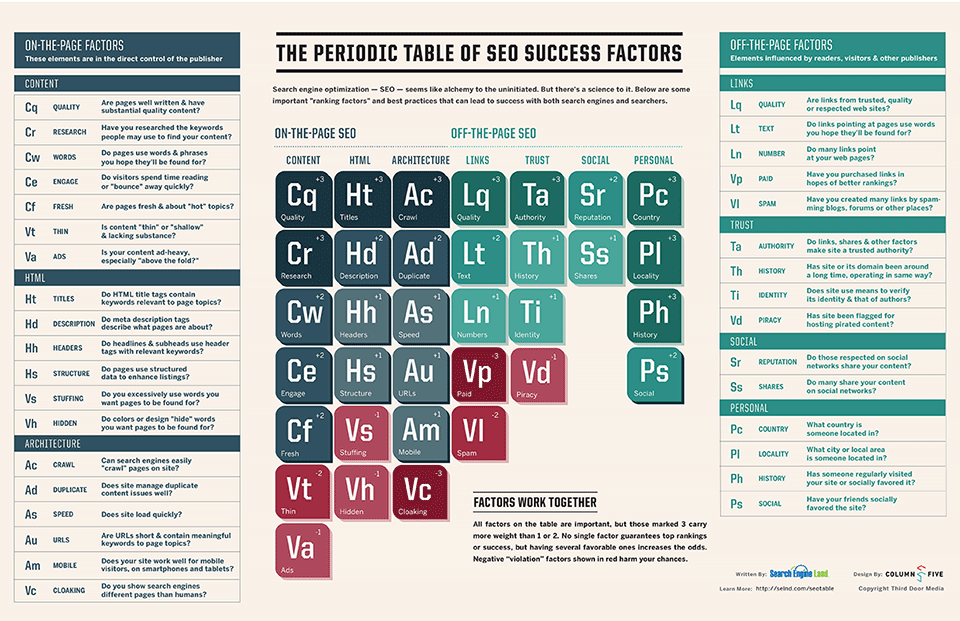
For your better understanding, it is important to know that Google delivers search results after undertaking three processes, namely crawling, indexing and serving. Crawling simply answers ‘does Google know your website'? Indexing is just about adding your website to Google's index. And Serving is concerned in websites having good and useful content that is relevant to the user's search.


Now that you know the process, following the below guidelines (taken from http://www.google.com/support/webmasters/bin/answer.py?answer=35769 and expanded on) will help Google find, index, and rank your website:


    1. When your website is ready, submit it to Google at http://www.google.com/addurl.html.

    2. Submit a Sitemap using Google Webmaster Tools. The sitemap you submitted will be use by Google to learn about your structure and increase coverage of your webpages.

    3. Make sure all the sites that should know about your pages are aware your site is online. And make sure that other websites link to yours, the many links that you'll have will increase your ranking.

    4. Provide high-quality content on your pages, especially your homepage. Make a clear hierarchy and text links. Every page should be reachable from at least one static text link.

    5. Offer a site map to your users with links that point to the important parts of your site. If the site map is larger than 100 or so links, you may want to break the site map into separate pages.

    6. Give visitors the information they're looking for by creating a useful, information-rich site, and write pages that clearly and accurately describe your content.

    7. Think about the words users would type to find your pages, and make sure that your site actually includes those words within it.

    8. Try to use text instead of images to display important names, content, or links. The Google crawler doesn't recognize text contained in images. If you must use images for textual content, consider using the "ALT" attribute to include a few words of descriptive text.

    9. Make sure that your elements and ALT attributes are descriptive and accurate.

    10. Check for broken links and correct HTML.

    11. If you decide to use dynamic pages (i.e., the URL contains a "?" character), be aware that not every search engine spider crawls dynamic pages as well as static pages. It helps to keep the parameters short and the number of them few.

    12. Keep the links on a given page to a reasonable number (fewer than 100).

    13. Use a text browser such as Lynx to examine your site

    14. Allow search bots to crawl your sites without session IDs or arguments that track their path through the site.

    15. Make sure your web server supports the If-Modified-Since HTTP header.

    16. Make use of the robots.txt file on your web server.

    17. If your company buys a content management system, make sure that the system creates pages and links that search engines can crawl.

    18. Use robots.txt to prevent crawling of search results pages or other auto-generated pages that don't add much value for users coming from search engines.

    19. Test your site to make sure that it appears correctly in different browsers.

    20. Make pages primarily for users, not for search engines.

    21. Avoid tricks intended to improve search engine rankings.

    22. Don't participate in link schemes designed to increase your site's ranking or PageRank.

    23. Don't use unauthorized computer programs to submit pages, check rankings, etc.

    24. Avoid hidden text or hidden links.

    25. Don't use cloaking or sneaky redirects.

    26. Don't send automated queries to Google.

    27. Don't load pages with irrelevant keywords.

    28. Don't create multiple pages, subdomains, or domains with substantially duplicate content.

    29. Don't create pages with malicious behavior, such as phishing or installing viruses, trojans, or other badware.

    30. Avoid "doorway" pages created just for search engine or other "cookie cutter" approaches such as affiliate programs with little or no original content.

    31. If your site participates in an affiliate program, make sure that your site adds value.

    32. Keep in mind that our algorithms can distinguish natural links from unnatural links and only natural links are useful for the indexing and ranking of your site.


Much of the above requires technical knowledge, and this is why SEO professionals like us make a living!


Search Engine Optimisation (SEO) service providers are specialists in doing all of the above. A great time to hire is when you're considering a website re-design, or planning to launch a new website. That way, you and your search engine optimiser can ensure that your site is designed to be search engine-friendly from the bottom up.


But you must take great caution when acquiring SEO services as there are unethical players in the market, who have given the industry a black eye through their overly aggressive marketing efforts and their attempts to manipulate search engine results in unfair ways. Practices that violate Google's guidelines may result in a negative adjustment of your website's presence in Google, or even the removal of your site from their index.


Webmasters who spend their energies upholding the spirit of the basic principles will provide a much better user experience and subsequently enjoy better ranking than those who spend their time looking for loopholes they can exploit. So just keep these in mind and be guided.


We at KayWeb (Sydney and Melbourne) are ethical SEO professionals.

OCT20
Web continues to grow in Australia

The COMSCORE Australia social networking usage study (August 2009) shows an overwhelming graph of statistics.


  1. A more than 1000% growth of Twitter over Facebook causes different reactions; some are happy to know that over 800,000 Aussies are now active on Twitter, while other consider this a typical figure for the later-released Twitter, which is still way behind the 6,000,000 Australian users of Facebook.


  2. While the first finding's reasons can be argued, the next finding cannot. That internet usage in Australia is growing rapidly. 75% of adults use social networks in Australia. Australia has over 400,000 bloggers. People spent on average 8.9 hours per week (or 1.5 days a month) using the web, which is up 27% compared to previous years - significantly, this is more time than Australians spent reading print media, watching movies, or playing video games.


These numbers are good for Australia.


Innovative web technologies have the potential play a vital role in driving productivity gain, creating new local businesses by those losing jobs during tough economic times, and helping fuel the growth the Australian economy needs to continue on its recovery path.